
Social Media Isn’t Marketing Anymore—It’s Infrastructure
There was a time when social media was optional.
A place to post updates. Share photos. Maybe stay “visible.”
That time is over.
Today, social media functions as your front-facing business system—your storefront, your first impression, your credibility layer, your communication channel, and your lead engine—all rolled into one.
If your business isn’t structured correctly on social platforms, it’s not just underperforming…
…it’s quietly losing ground to competitors who are.
What Social Media Strategy Actually Means (And Why Most Businesses Miss It)
Most businesses confuse activity with strategy.
Posting occasionally isn’t strategy.
Boosting a post isn’t strategy.
Even hiring someone to “run social” isn’t strategy if there’s no system behind it.
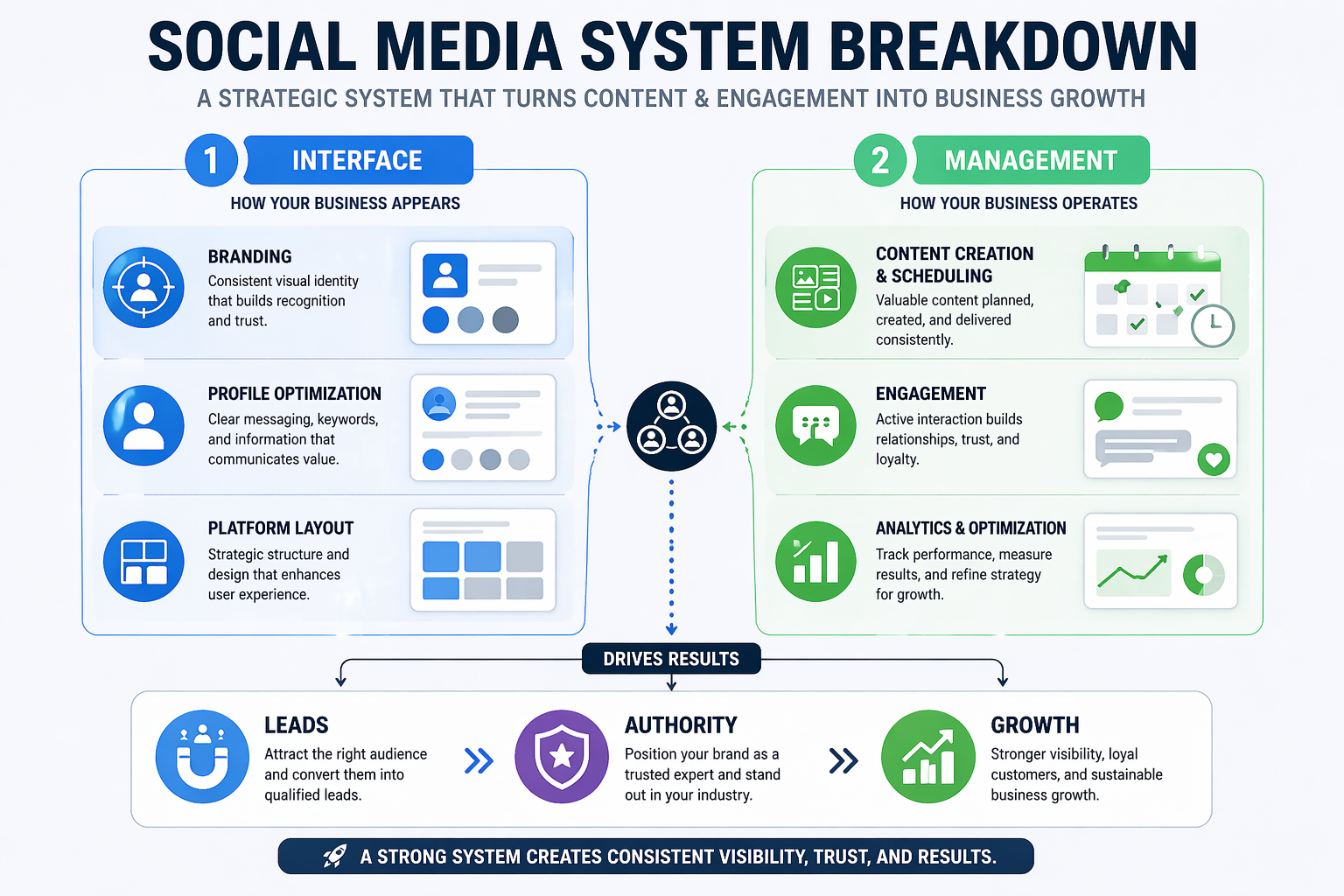
A true social media system is built on two core components:
1. Social Media Interface (How Your Business Appears)
This is the structural layer—what people see the moment they land on your profile.
- Profile optimization (bios, descriptions, keywords)
- Visual branding consistency (colors, tone, layout)
- Platform-specific formatting (LinkedIn vs Instagram vs TikTok)
- Clear messaging about who you help and how
If this layer is weak, you lose trust instantly.
2. Social Media Management (How Your Business Operates)
This is the execution layer—how your business shows up over time.
- Content creation and scheduling systems
- Engagement processes (comments, messages, conversations)
- Analytics tracking and performance optimization
- Content planning aligned to business goals
Without this layer, even great content fails.
Also Read 📖Sustainable Web Design: Reduce Website Carbon & Operating Costs
Service-Business Scenario: What This Looks Like in the Real World
Let’s look at a typical service business:
- Posts randomly when there’s time
- Focuses only on promotions
- Rarely responds to comments or messages
- Has no clear content direction
Result:
- Low visibility
- Minimal engagement
- No consistent leads
Now compare that to a structured system:
- Weekly content calendar
- Mix of video, educational, and authority-building posts
- Active engagement with audience
- Clear messaging and branding
Result:
- Higher reach and discoverability
- Stronger brand authority
- Consistent inbound leads
Same business. Same market.
Different system.
Also Read 📖The Future Operations Audit: Predicting Problems Before They Happen
What’s Driving Social Media Right Now (2025–2026)

The landscape has shifted—and it’s not slowing down.
Authentic Content Is Winning
Highly polished, overly produced content is losing effectiveness.
What performs now:
- Real people
- Real conversations
- Real expertise
People trust what feels human—not corporate.
Creator & Influencer Ecosystems Are Expanding
Micro-creators are outperforming large influencers because they feel relatable.
For businesses, this means:
- Collaboration opportunities
- Niche audience targeting
- Faster trust-building
AI + Personalization Is Reshaping Visibility
Platforms are getting smarter.
- Content is delivered based on behavior
- Engagement patterns drive reach
- AI tools assist in timing, targeting, and optimization
But here’s the truth:
AI enhances strategy—it doesn’t replace it.
Social Commerce Is Exploding
Platforms like Instagram and TikTok are no longer just awareness tools.
They’re direct revenue channels.
- Video + product/service = conversion
- Seamless in-app purchasing
- Shorter sales cycles
Also Read 📖Video Production vs Traditional Marketing Materials: What Wins in 2026?
Operational Impact: What This Means for Your Business
When social media is done right, it becomes:
- A lead generation engine
- A recruitment tool
- A brand authority builder
When it’s done wrong, it becomes:
- A time drain
- A reputation risk
- A missed opportunity
This isn’t about “being active.”
It’s about being effective.
Why This Matters More Than Ever
Consumer behavior has changed.
People aren’t just searching—they’re scrolling.
They’re discovering businesses through:
- Instagram reels
- LinkedIn posts
- TikTok videos
- Facebook content
If your business isn’t showing up in those environments, you’re invisible to a growing portion of your market.
The Cost of Getting This Wrong
Weak social media systems lead to:
- Inconsistent visibility
- Lower trust levels
- Missed lead opportunities
- Higher customer acquisition costs
Strong systems lead to:
- Predictable lead flow
- Higher engagement and conversion rates
- Stronger brand positioning
- Long-term growth stability
This is an operational issue—not just a marketing one.
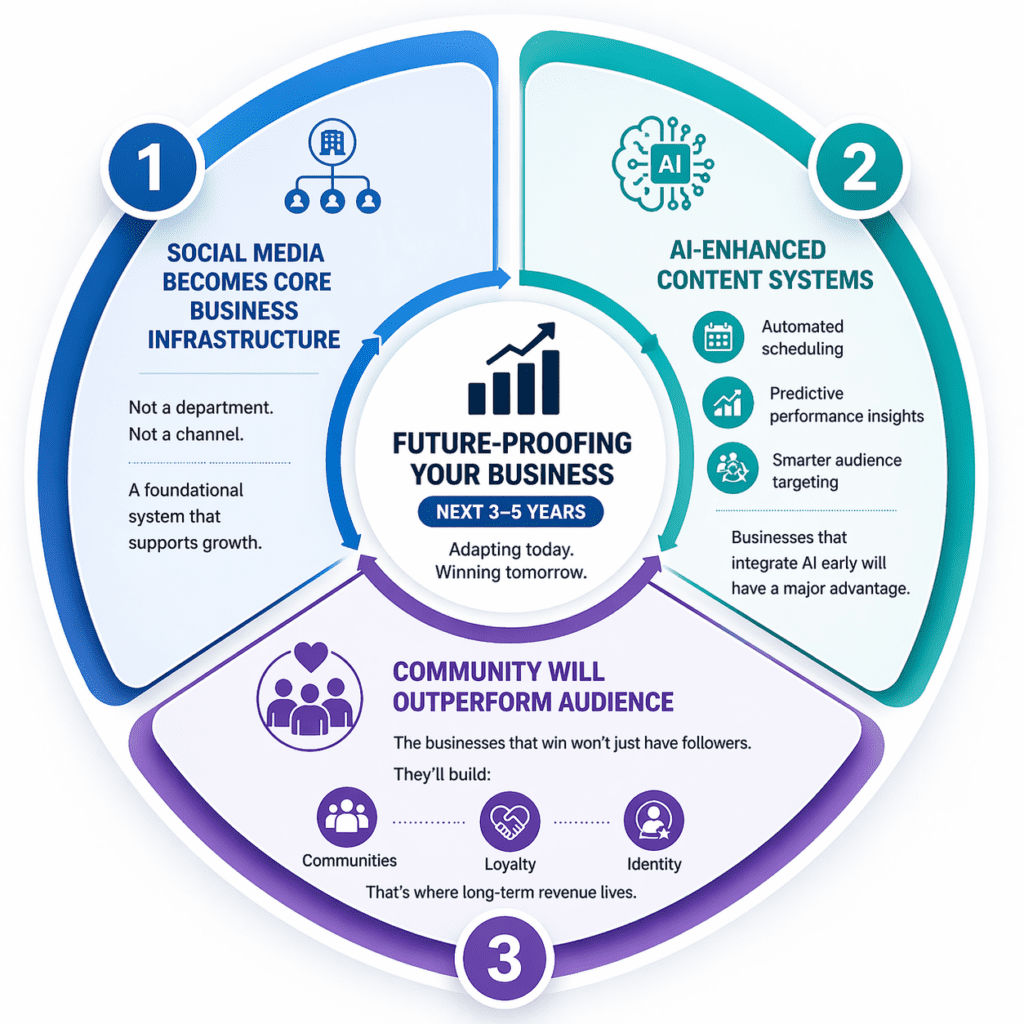
“Social media isn’t marketing anymore—it’s your business interface.”
Conversion Insight
If your competitors are:
- Posting consistently
- Engaging actively
- Using video effectively
…and you’re not?
You’re not competing.
You’re disappearing.
CTA
If your social media feels scattered, inconsistent, or ineffective, that’s not a content issue—it’s a system issue.
The right structure changes everything.
Let’s build a social media system that actually drives growth.
FAQs
- How often should businesses post?
Consistency matters more than frequency. A structured schedule beats random posting every time. - Is social media effective for B2B businesses?
Yes—especially on LinkedIn and through educational video content. - What platform should my business focus on?
That depends on your audience. Strategy should determine platform—not the other way around. - Should I outsource social media management?
Often yes. It improves consistency, quality, and strategic execution. - What type of content performs best?
Short-form video and educational content consistently outperform static posts. - Do I need paid advertising?
It helps, but organic strategy is still essential for long-term growth. - How do I measure success?
Focus on engagement, conversions, and lead flow—not just likes or followers. - Can AI manage social media completely?
AI can assist, but human strategy and insight are still critical. - What’s the biggest mistake businesses make?
Posting without a clear strategy or system. - What’s the first step to improving social media?
Audit your current presence and define clear business goals.