
The Lead Generation War Has Changed
For years, businesses could rely on simple marketing formulas:
Run ads.
Send postcards.
Blast emails.
Maybe rank on Google if they had time.
That world is gone.
Today’s lead generation landscape is fragmented, expensive, algorithm-driven, and heavily influenced by artificial intelligence. Businesses are competing not only against local competitors—but against shifting consumer attention spans, platform saturation, AI-generated search summaries, and growing distrust in advertising itself.
And here’s the uncomfortable truth:
Most businesses aren’t struggling because they lack effort.
They’re struggling because they’re investing in disconnected marketing systems without understanding how modern lead generation actually works anymore.
The businesses winning in 2026 are not relying on one tactic.
They’re building integrated visibility systems.
Why Lead Generation Feels Harder Than Ever

Business owners everywhere are asking the same questions:
- Why are ad costs skyrocketing?
- Why are fewer people responding to emails?
- Why does social media engagement feel unpredictable?
- Why are leads inconsistent?
- Why does visibility disappear overnight?
Several major shifts are driving this:
Consumer Trust Has Changed
Consumers are skeptical.
They ignore obvious advertising, scroll past generic promotions, and increasingly rely on reviews, authority content, recommendations, and AI-generated search summaries before making decisions.
AI Is Reshaping Discovery
Search behavior is changing rapidly.
Consumers now discover businesses through:
- Google AI Overviews
- ChatGPT recommendations
- TikTok search
- YouTube search
- Voice assistants
- AI-powered summaries
Visibility is no longer just about ranking on page one.
It’s about becoming a trusted source AI systems recognize.
Also Read 📖Why Are AI Governance and Ethics Competitive Advantages Today?
Attention Is Fragmented
Your customers are everywhere:
- Email inboxes
- Social media feeds
- Search engines
- Streaming platforms
- Messaging apps
- AI tools
That means businesses must think strategically—not tactically.
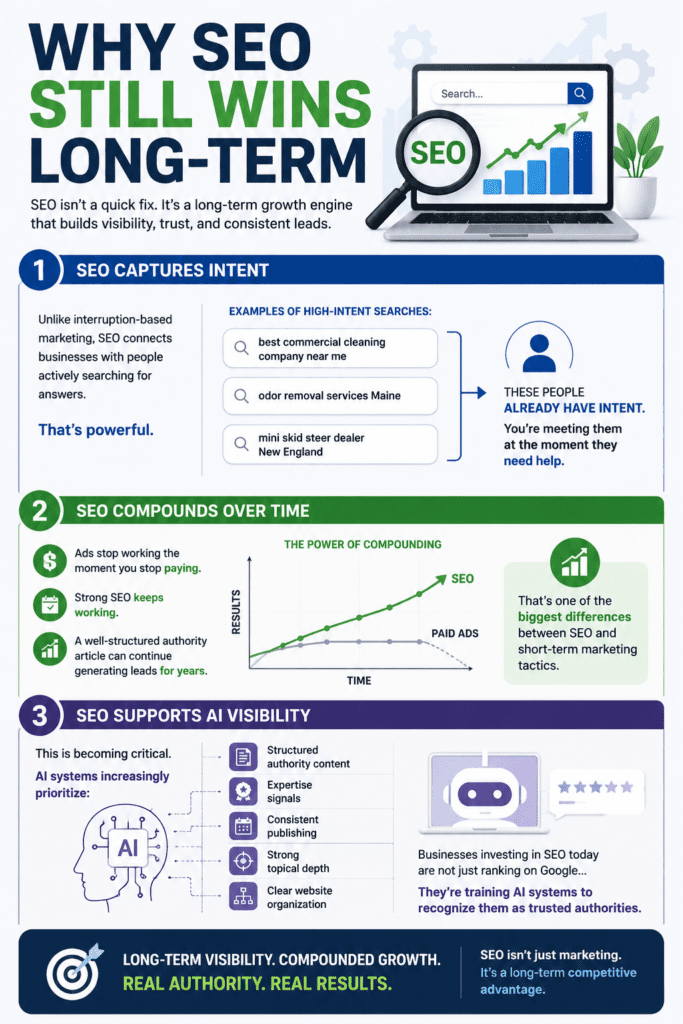
SEO: The Long-Term Visibility Asset
Search Engine Optimization (SEO) has evolved from a technical marketing tactic into something much bigger:
Digital authority infrastructure.
SEO today is not simply about keywords.
It’s about building long-term discoverability across both traditional search engines and emerging AI systems.
Also Read 📖With the SEO Changes of 2025, What Does 2026 Have in Store for Organic Traffic?
The Downsides of SEO
SEO is powerful—but it’s not magic.
SEO Takes Time
Businesses expecting instant results often get frustrated.
Strong SEO systems typically require:
- Consistency
- Content depth
- Technical optimization
- Strategic planning
- Patience
Weak SEO Is Worse Than No SEO
Thin content, outdated websites, poor optimization, and inconsistent messaging can actually hurt credibility.
Modern SEO requires quality.
Not shortcuts.
Email Marketing: Powerful or Risky?
Email marketing remains one of the highest ROI marketing systems available.
But there’s a major distinction businesses must understand:
Organic email marketing and purchased email campaigns are NOT the same thing.
And confusing the two can create serious legal and reputational problems.
Organic Email Marketing: The Right Way to Build a List
Organic email marketing means people voluntarily choose to hear from your business.
This may happen through:
- Website opt-ins
- Lead magnets
- Newsletter signups
- Existing customer relationships
- Educational downloads
- Event registrations
This creates something incredibly valuable:
Permission-based communication.
Also Read 📖Why 2026 Will Be the Year SMBs Adopt Automated Brand Story Engines
Why Organic Email Campaigns Still Work
You Own the Audience
Unlike social media followers, your email list belongs to you.
Algorithms cannot suddenly remove access to your audience.
Email Builds Relationships
Strong email systems nurture trust over time.
Businesses can:
- Educate customers
- Share insights
- Stay top-of-mind
- Drive repeat business
- Support long sales cycles
Email Often Produces Excellent ROI
When done properly, email marketing remains one of the most cost-effective lead nurturing systems available.
Especially for service businesses and relationship-driven industries.
The Dangerous Side of Purchased Email Lists
This is where many businesses make costly mistakes.
Buying email lists may seem like a shortcut to growth…
But it often creates more problems than opportunities.
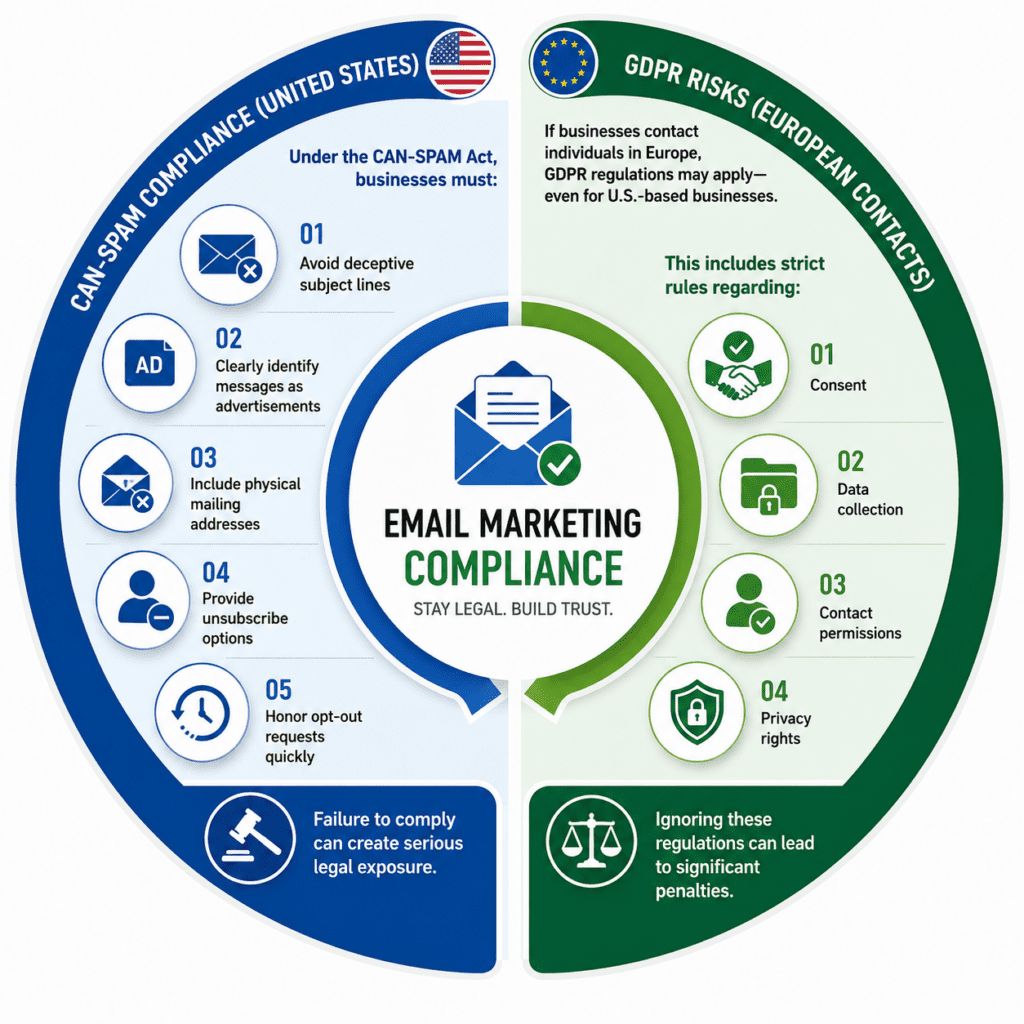
Legal Risks Businesses Must Understand
Reputation Damage Is Often Worse Than Legal Damage
Even if businesses avoid legal trouble, purchased lists commonly create:
- Spam complaints
- Blacklisted domains
- Low engagement rates
- Destroyed sender reputation
- Poor deliverability
Meaning future emails—even legitimate ones—may never reach inboxes.
That’s a massive long-term problem.
Direct Mail: Old School or Quietly Effective?
Many businesses assume direct mail is dead.
It’s not.
But it has changed dramatically.
Why Direct Mail Still Works for Some Businesses

Physical mailboxes are less crowded than digital inboxes.
That creates opportunity.
For the right industries, direct mail still delivers:
- Strong local visibility
- High brand recall
- Tangible trust signals
- Better geographic targeting
Especially for:
- Home services
- Real estate
- Healthcare
- High-ticket local businesses
- Political campaigns
- Luxury services
The Real Problem With Direct Mail: Cost
This is where businesses hesitate—and rightfully so.
Direct mail campaigns now involve:
- Design costs
- Printing costs
- Postage increases
- List acquisition costs
- Delivery logistics
And unlike SEO, direct mail does not compound long-term.
Once the campaign ends, visibility disappears.
Is Direct Mail Worth It in 2026?
Sometimes yes.
Sometimes absolutely not.
The answer depends on:
- Customer lifetime value
- Geographic concentration
- Offer quality
- Follow-up systems
- Brand positioning
- Sales margins
For some businesses, direct mail still produces excellent ROI.
For others, it becomes an expensive guessing game.
Why the Smartest Businesses Combine Systems
The businesses growing consistently in 2026 rarely rely on one marketing channel alone.
Instead, they build layered visibility systems.
For example:
SEO Captures Search Intent
People searching for answers discover your business organically.
Email Nurtures Relationships
Email keeps prospects engaged over time.
Direct Mail Reinforces Local Presence
Physical visibility strengthens trust and recall.
Together, these systems create:
✅ Higher authority
✅ Better customer trust
✅ Repeated exposure
✅ Lower long-term acquisition costs
✅ More stable lead flow
AI Is Changing the Visibility Game Forever
One of the biggest mistakes businesses make today is assuming marketing still works the way it did five years ago.
It doesn’t.
AI-generated search experiences are rapidly transforming how businesses get discovered.
That means:
Businesses relying ONLY on ads or social media are vulnerable.
Businesses building authority-based SEO systems are positioning themselves for long-term visibility.
That’s the future.
Also Read 📖How AI Reshapes Executive Decision-Making Without Replacing Leadership in 2026
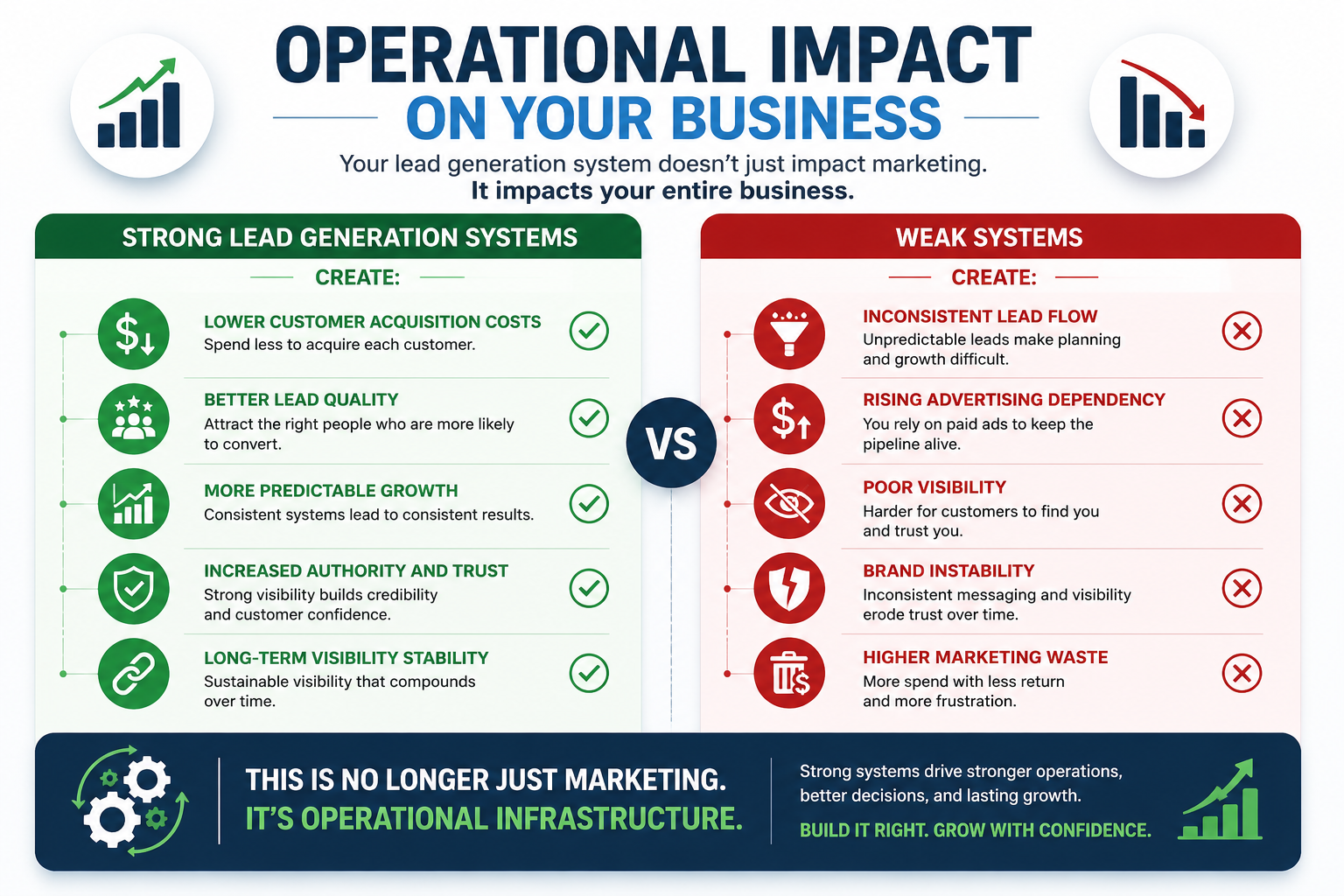
Conclusion: The Real Winners Build Systems, Not Campaigns
Businesses looking for shortcuts often jump from tactic to tactic:
- Ads this month
- Mailers next month
- Random email blasts after that
But modern lead generation doesn’t reward randomness.
It rewards structure.
The businesses dominating visibility today are building integrated systems that combine:
- SEO authority
- Relationship-driven email marketing
- Strategic local reinforcement
- AI-ready visibility structures
That’s where sustainable growth comes from now.
What To Do Next...
If your lead generation feels inconsistent, expensive, or unpredictable, the issue may not be effort—it may be your strategy mix.
Modern visibility requires systems that work together.
Let’s build a lead generation structure designed for the way consumers actually discover businesses today.
10 FAQs
1. Is SEO still worth investing in during the AI era?
Absolutely. In fact, SEO is becoming even more important because AI-driven search systems rely heavily on trusted, structured, authority-based content when recommending businesses. Companies investing in SEO today are building long-term visibility for both traditional search and AI-powered discovery.
2. Is buying email lists legal?
Buying email lists is not automatically illegal, but businesses must comply with regulations such as the CAN-SPAM Act and potentially GDPR requirements if international contacts are involved. Purchased lists also carry major risks involving spam complaints, blacklisting, and damaged sender reputation.
3. What is the safest way to build an email list?
The safest and most effective method is organic list building. This includes newsletter signups, website opt-ins, lead magnets, customer inquiries, event registrations, and educational downloads where users voluntarily choose to receive communication from your business.
4. Does direct mail still work in 2026?
Yes—when used strategically. Direct mail can still be highly effective for local service businesses, healthcare providers, real estate companies, and high-ticket industries where geographic targeting and brand trust matter. However, rising costs make strategy and targeting critical.
5. What marketing channel delivers the best long-term ROI?
SEO often provides the strongest long-term return on investment because it compounds over time. Unlike ads or mailers that stop producing results once spending ends, strong SEO content can continue generating traffic and leads for years.
6. Why are email open rates declining?
Consumers are overwhelmed with promotional content and have become more selective about what they engage with. Generic messaging, poor targeting, and over-emailing contribute to lower open rates. Personalized, valuable content performs far better.
7. How does AI impact business visibility online?
AI systems now influence how consumers discover businesses through search summaries, recommendations, voice assistants, and conversational tools. Businesses with strong authority content, structured websites, and consistent publishing are more likely to be surfaced by AI platforms.
8. Should businesses rely only on social media for leads?
No. Social media alone creates significant vulnerability because platforms and algorithms change constantly. Smart businesses combine social media with SEO, email marketing, and other visibility systems to create more stable lead generation.
9. What’s the biggest lead generation mistake businesses make?
The biggest mistake is relying on isolated tactics instead of building integrated systems. Many businesses jump from ads to emails to mailers without a unified strategy connecting visibility, trust, nurturing, and conversion.
10. What lead generation strategy works best today?
The most effective modern strategy combines multiple systems working together:
✅ SEO for discoverability
✅ Email marketing for relationship nurturing
✅ Social media for engagement and visibility
✅ Direct mail for local reinforcement when appropriate
Businesses that build integrated visibility systems consistently outperform businesses relying on a single tactic.