

Sustainable Digital Design: How Eco-Friendly Web Practices Reduce Costs and Carbon
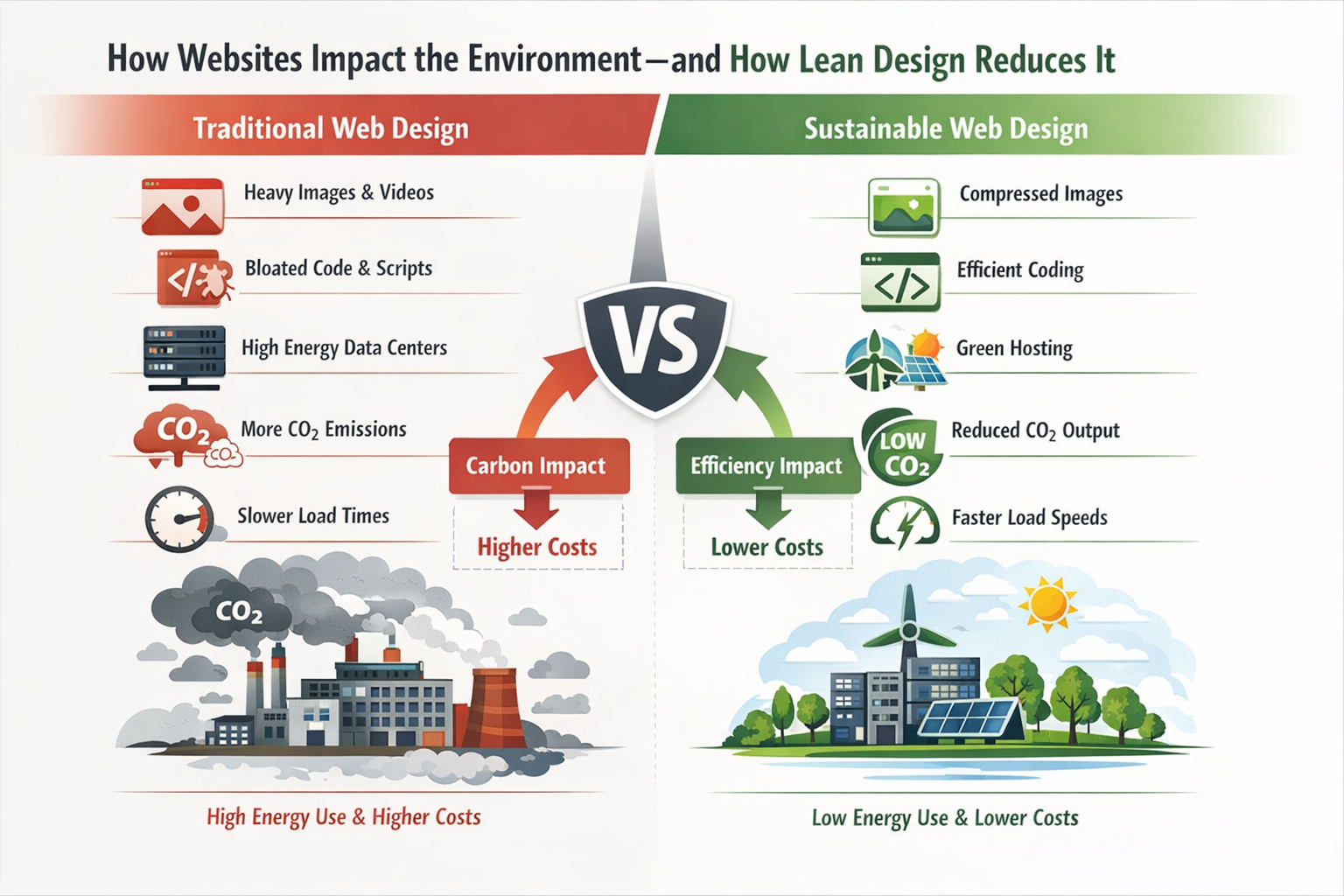
The internet feels intangible. Websites appear weightless, floating somewhere in a cloud-shaped metaphor. In reality, the web runs on enormous physical infrastructure—data centers, network cables, routers, and servers that consume vast amounts of electricity every second.
The global internet currently accounts for roughly 3–4% of worldwide carbon emissions, a footprint comparable to the aviation industry. Every webpage load triggers server requests, data transfers, and device processing that collectively consume energy.
For modern businesses, this presents both a challenge and an opportunity.
A new discipline—sustainable digital design—is emerging that aligns environmental responsibility with financial efficiency. By optimizing code, reducing digital bloat, choosing responsible hosting, and designing cleaner user experiences, organizations can significantly reduce their digital carbon footprint while simultaneously improving performance and lowering operational costs.
In other words: lean digital design isn’t just ethical—it’s economically smart.
The Hidden Carbon Footprint of the Internet
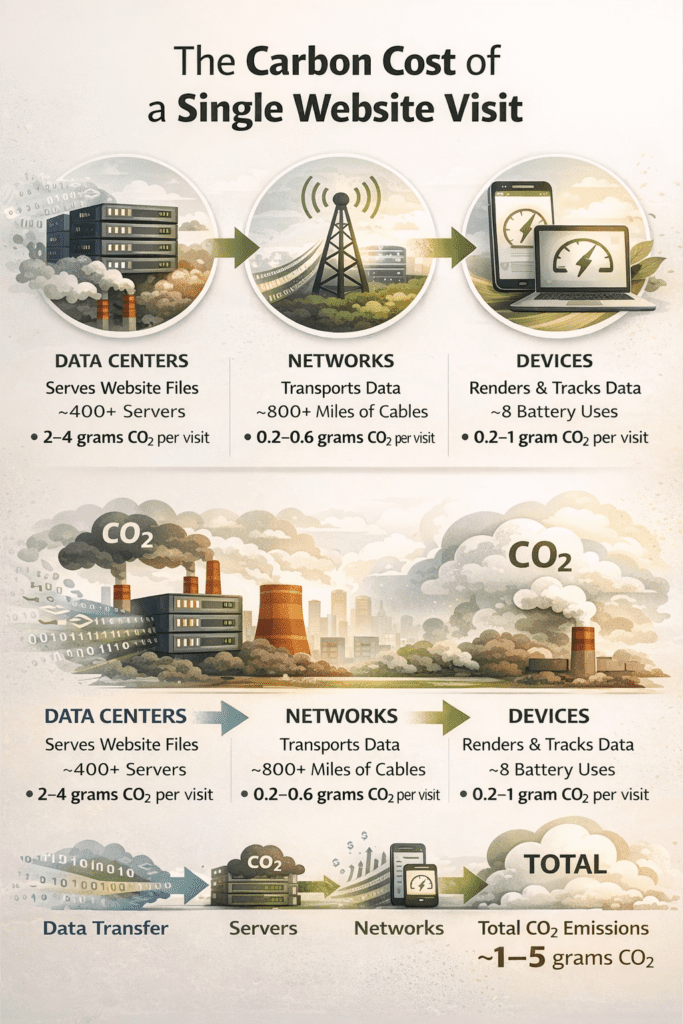
Each time someone loads a webpage, a chain reaction occurs across the global network:
- A request is sent from the user’s device
- Servers process the request
- Data is transferred across networks
- The browser downloads and renders assets
- The device processes scripts and media
Every step requires electricity.
Heavy websites amplify the problem. Modern pages often include:
- Large image libraries
- Uncompressed videos
- Multiple tracking scripts
- Third-party marketing integrations
- Redundant code frameworks
A typical webpage today can exceed 2–4 megabytes of transferred data, and complex sites may be much larger.
Multiply that by thousands or millions of visitors and the energy cost grows quickly.
Sustainable web design tackles this inefficiency by asking a simple but powerful question:
What if websites only loaded what they actually needed?
Also read📖 Professional Web Design Services | Pilgrim Consulting & Design
Why Sustainable Web Design Saves Money
Many organizations initially approach sustainability as a compliance or branding initiative. However, sustainable digital practices frequently produce direct financial savings.
Lower Hosting Costs
Lean websites require fewer server resources. Reduced bandwidth and smaller file sizes mean:
- Lower CDN costs
- Reduced server load
- Fewer infrastructure upgrades
Companies operating high-traffic sites often see measurable hosting savings after performance optimization.
Improved Conversion Rates
Fast websites convert better. Numerous performance studies show that even a one-second improvement in page load time can significantly improve:
- Conversion rates
- Session duration
- Customer engagement
Sustainable design naturally improves speed because smaller pages load faster.
Reduced Development Complexity
Minimalist design often leads to cleaner codebases. This reduces:
- Debugging time
- Maintenance overhead
- Technical debt
A lean system is easier to maintain than a complex one filled with redundant scripts.
Carbon-Aware Coding: Writing Efficient Software
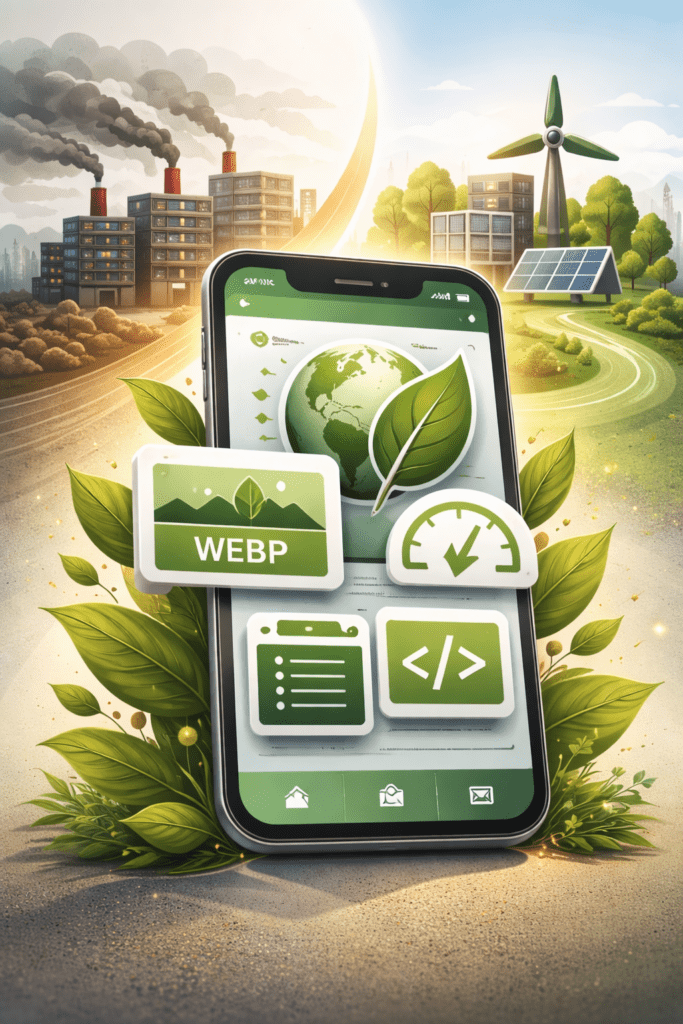
One of the most overlooked contributors to digital emissions is inefficient code.
Every line of JavaScript, every API call, and every database query consumes processing power. Efficient code reduces computation requirements and therefore reduces energy use.
Carbon-aware coding includes practices such as:
Optimized Asset Loading
Loading only the assets needed for the current screen instead of entire libraries.
Examples include:
- Lazy loading images
- Conditional script loading
- Modular JavaScript architecture
Removing Unused Code
Many websites ship with large frameworks where only a fraction of the functionality is used. Eliminating unnecessary dependencies significantly reduces page size.
Efficient Database Queries
Reducing redundant server calls and optimizing database structures minimizes server processing time.
Lightweight Frameworks
Choosing efficient development frameworks rather than bloated ones can reduce data transfer dramatically.
In sustainable design, every kilobyte matters.
Also read📖How Much Does Web Design & Development Cost?
Green Hosting: Where Your Website Lives Matters
Not all hosting infrastructure is created equal.
Data centers consume enormous amounts of electricity for both computing and cooling. However, some hosting providers actively invest in sustainable energy and infrastructure improvements.
Eco-friendly hosting typically includes:
Renewable Energy Powered Data Centers
Some providers operate data centers powered primarily by:
- Wind energy
- Solar energy
- Hydroelectric power
Carbon Offset Programs
Certain hosting platforms invest in environmental projects to offset their energy use.
Energy Efficient Cooling Systems
Modern facilities often deploy:
- Liquid cooling
- Free-air cooling
- Advanced heat recycling
Choosing responsible hosting can dramatically reduce the environmental impact of a website without affecting performance.
Minimalist UX: When Less Is Actually More
Minimalist design has been trending for years in digital design—but sustainability adds a powerful new reason to embrace it.
Every unnecessary element increases:
- File size
- Load time
- CPU processing
- Energy consumption
Minimalist user experience design emphasizes:
Clear Navigation
Simplified layouts reduce cognitive load and improve usability.
Purposeful Visual Elements
Each graphic, animation, or interaction must justify its presence.
Efficient Media Usage
Images and videos should be:
- Compressed
- Responsive
- Used strategically
A visually elegant interface can often be achieved with far fewer resources than many modern websites use today.
The result is a site that is both faster and more accessible.
Measuring Digital Carbon Footprints
Sustainable web design is increasingly supported by measurement tools that estimate the carbon impact of websites.
These tools evaluate factors such as:
- Page weight
- Hosting energy sources
- Data transfer volume
- Content delivery methods
While estimates vary, they provide useful benchmarks for improving sustainability.
Organizations can monitor improvements as they:
- Compress assets
- Reduce scripts
- Improve caching strategies
- Optimize delivery networks
The process becomes similar to performance optimization—except the metric being improved is environmental impact.
Practical Steps Toward Sustainable Digital Design
Businesses looking to improve their digital sustainability can begin with several practical strategies.
Optimize Images
Images often represent the largest portion of webpage data. Converting images to modern formats such as WebP or AVIF can reduce file sizes dramatically.
Implement Caching
Proper caching reduces the need to repeatedly download identical resources.
Reduce Third-Party Scripts
Tracking scripts, embedded widgets, and external libraries can significantly increase page weight.
Prioritize Performance
Speed optimization and sustainability often align perfectly. Techniques that improve performance almost always reduce energy consumption.
Choose Responsible Infrastructure
Selecting energy-efficient hosting providers ensures the backend of a website aligns with sustainability goals.
Why Sustainable Digital Design Is Becoming Standard
Environmental responsibility is increasingly influencing business decisions across industries. Digital infrastructure is no exception.
Several trends are accelerating adoption of sustainable web practices:
ESG Accountability
Companies are under increasing pressure to demonstrate environmental responsibility as part of Environmental, Social, and Governance reporting.
Rising Energy Costs
Energy efficiency directly reduces operational expenses for both hosting providers and businesses.
User Expectations
Consumers increasingly favor brands that demonstrate environmental responsibility.
Regulatory Attention
Governments are beginning to examine digital infrastructure sustainability as part of broader climate initiatives.
Forward-thinking organizations are recognizing that sustainable digital design will soon be a competitive advantage rather than an optional initiative.
Also read📖Top 2025 Web Design Trends That Will Transform Your Business Website
The Future of Lean, Green Digital Design
The internet of the early 2000s was lightweight by necessity. Limited bandwidth forced developers to write efficient code and optimize assets carefully.
Over time, as bandwidth expanded, websites grew heavier and more complex.
Now the pendulum is swinging back—but with a new motivation.
The next generation of digital design will likely emphasize:
- Performance-first architecture
- Carbon-aware software engineering
- Energy-efficient infrastructure
- Minimalist user experiences
Organizations that adopt sustainable design principles today are positioning themselves for a future where efficiency, performance, and environmental responsibility converge.
Lean websites load faster, cost less to operate, and reduce environmental impact simultaneously.
In digital design, sustainability is no longer just about ethics.
It’s about building smarter systems.
Conclusion
Sustainable digital design transforms how organizations think about websites and digital platforms. Instead of focusing solely on aesthetics or feature expansion, sustainable design prioritizes efficiency, performance, and responsible infrastructure.
By adopting carbon-aware coding, selecting renewable hosting providers, optimizing assets, and embracing minimalist user experiences, businesses can significantly reduce their digital carbon footprint while also lowering operational costs.
The result is a digital ecosystem that performs better, scales more efficiently, and aligns with the growing demand for environmental responsibility.
The future of web design is not heavier, louder, or more complex.
It is lean, intentional, and sustainable.
(FAQs)
1. What is sustainable web design?
Sustainable web design focuses on building websites that minimize energy consumption and digital carbon emissions through efficient coding, optimized media, lean user interfaces, and environmentally responsible hosting infrastructure.
2. Why does website performance affect carbon emissions?
Faster websites require less server processing, data transfer, and device energy. Reducing page size and optimizing code lowers the amount of electricity needed to deliver web content.
3. How much carbon does a typical website produce?
Estimates vary, but an average webpage can produce several grams of CO₂ per visit depending on page size, hosting energy sources, and user traffic volume.
4. What is carbon-aware coding?
Carbon-aware coding refers to writing efficient software that minimizes computing resources, reduces server load, and lowers the energy required to run digital systems.
5. Does green web hosting improve website performance?
Often yes. Many environmentally responsible hosting providers invest in modern infrastructure that improves both energy efficiency and site performance.
6. How can businesses reduce their website’s carbon footprint?
Businesses can compress images, remove unnecessary scripts, optimize code, enable caching, and choose hosting providers powered by renewable energy.
7. Are minimalist websites better for sustainability?
Minimalist websites typically transfer less data and require fewer resources to load, making them more energy-efficient and environmentally sustainable.
8. Do faster websites convert better?
Yes. Numerous studies show that faster load times increase user engagement, improve conversion rates, and reduce bounce rates.
9. What tools measure a website’s carbon footprint?
Several tools estimate website carbon emissions by analyzing page weight, hosting energy sources, and data transfer requirements.
10. Why is digital sustainability becoming important for businesses?
Digital sustainability supports ESG goals, reduces operating costs, improves performance, and aligns with growing consumer expectations for environmentally responsible companies.