

The Old ROI Is Not Broken—It’s Incomplete
Click-through rates (CTR) once ruled because attention was scarce and platforms were young. A click meant curiosity. Curiosity often meant intent.
That causal chain has snapped.
Today, users click accidentally, scroll reflexively, and buy later—sometimes days or weeks after a piece of content made them feel understood. Meanwhile, the content that actually changes minds often registers zero clicks.
CTR measures motion.
It does not measure meaning.
And meaning is where modern purchasing decisions are forged.
Why Emotion Has Become the Primary Buying Signal
Neuroscience has been quietly undermining rational-buyer theory for decades. Antonio Damasio’s work showed that patients who lost emotional processing abilities could not make decisions at all—even when logic remained intact.
Fast forward to today’s digital environment:
- Consumers are flooded with options
- Functional differences between products are shrinking
- Trust, safety, identity, and values dominate decision-making
Emotion is no longer a soft metric.
It is the operating system of commerce.
Brands that fail to measure emotional engagement are flying blind in a feelings-first economy.
Also Read 👉🏼How Can Micro-Personalization Help SMB Websites Feel Human?
Defining Emotional Engagement (Without Getting Fluffy)
Emotional engagement is not “likes” or “vibes.”
It is a measurable pattern of affective response to content.
It includes:
- Emotional valence (positive, neutral, negative)
- Emotional intensity (how strongly something is felt)
- Emotional alignment (does this reinforce identity or values?)
- Emotional memory (is it remembered later?)
These signals predict:
- Brand preference
- Price tolerance
- Word-of-mouth behavior
- Long-term loyalty
CTR predicts… a click.
The Metrics That Actually Matter in 2026
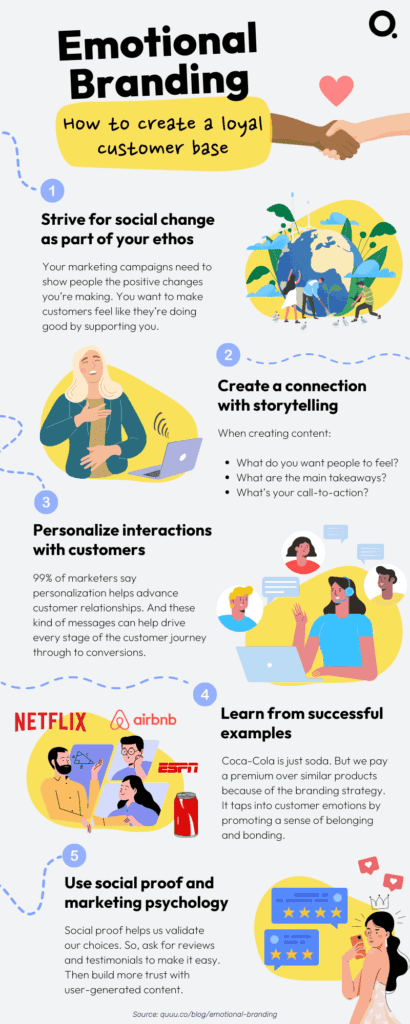
Sentiment Analysis (Contextual, Not Keyword-Based)
Modern sentiment analysis uses NLP models that detect tone, intent, and emotional polarity across:
- Comments
- Reviews
- Shares with commentary
- Long-form replies
- UGC captions
Advanced systems now detect:
- Sarcasm
- Moral framing
- Trust language
- Fear vs reassurance patterns
A post with 12 comments expressing relief, trust, or resonance is more valuable than 1,200 silent clicks.
Dwell Time and Scroll Depth (Attention With Intent)
Emotion slows people down.
High emotional resonance correlates strongly with:
- Longer time on page
- Full scroll completion
- Pauses during video playback
- Re-reading behavior
These are physiological tells.
The brain does not linger unless something matters.
Save, Share, and Dark Social Signals
People save content that reflects who they are or who they want to be.
Shares—especially private shares via messaging apps—are among the strongest emotional indicators because they involve reputation risk. No one shares content lightly anymore.
Dark social is where belief spreads.
Narrative Resonance Index (Emerging Metric)
Forward-thinking teams are now scoring content on:
- Story coherence
- Character relatability
- Conflict recognition
- Emotional resolution
Stories outperform facts not because facts are weak—but because stories encode facts into memory.
This is not branding.
This is cognitive architecture.
Why Emotional Metrics Predict Revenue Better Than CTR
CTR spikes often correlate with:
- Curiosity gaps
- Outrage
- Ambiguity
- Manipulative hooks
These produce traffic without trust.
Emotional engagement metrics correlate with:
- Repeat purchases
- Brand advocacy
- Lower churn
- Higher lifetime value (LTV)
In B2B, emotional alignment predicts:
- Shorter sales cycles
- Higher close rates
- Fewer price objections
In B2C, it predicts:
- Brand stickiness
- Reduced ad fatigue
- Community formation
The spreadsheet still matters.
But the feelings column is finally visible.
Aligning Social and Content Strategy to Emotional ROI
Content Strategy Shifts That Actually Work
High-performing teams are shifting from:
- “What will get clicks?”
to - “What will make our audience feel understood?”
That means:
- Fewer posts, deeper impact
- More lived-experience language
- Clear value alignment
- Calm authority over hype
Emotionally intelligent brands do not shout.
They resonate.
Also Read 👉🏼From Clicks to Clients — The Power of Organic SEO and GEO Targeting
Platform-Specific Emotional Design
Each platform amplifies different emotions:
- LinkedIn: trust, competence, foresight
- Instagram: identity, belonging, aspiration
- Facebook: safety, familiarity, community
- TikTok: delight, surprise, authenticity
CTR flattens these differences.
Emotional metrics reveal them.
The Measurement Stack for Emotional ROI
A modern emotional analytics stack often includes:
- NLP-based sentiment tools
- Behavioral analytics (scroll, dwell, replays)
- Qualitative comment analysis
- Survey-based emotional recall
- Post-purchase attribution modeling
The goal is not to replace ROI.
The goal is to explain it.
What Happens to Brands That Ignore Emotional ROI
They will still get traffic.
They will still run ads.
They will still chase optimization.
And they will slowly lose relevance.
Because the future belongs to brands that understand this uncomfortable truth:
People do not buy because they are convinced.
They buy because something felt right.
The new ROI measures that feeling.
FAQs
1. What is emotional engagement in marketing?
Emotional engagement measures how content makes audiences feel, including trust, resonance, and alignment with values, which strongly influences buying behavior.
2. Why is click-through rate no longer enough?
CTR tracks clicks, not meaning or trust, and fails to capture delayed purchases, brand loyalty, or emotional impact.
3. How is sentiment analysis used in marketing?
Sentiment analysis uses natural language processing to evaluate emotional tone in comments, reviews, and conversations around content.
4. Can emotional engagement be measured accurately?
Yes. Through sentiment scoring, dwell time, narrative resonance, and behavioral signals, emotional response can be quantified reliably.
5. Does emotional engagement affect revenue?
Strong emotional engagement correlates with higher lifetime value, repeat purchases, and stronger brand advocacy.
6. What platforms benefit most from emotional metrics?
All platforms do, but LinkedIn, Instagram, and TikTok show particularly strong emotional signal differentiation.
7. Is emotional marketing manipulative?
Not when done ethically. Emotional engagement reflects understanding and alignment, not coercion.
8. How do B2B brands use emotional ROI?
B2B brands use emotional metrics to build trust, shorten sales cycles, and reduce price sensitivity.
9. What tools measure emotional engagement?
Tools include NLP sentiment platforms, behavioral analytics software, and qualitative feedback systems.
10. Will emotional ROI replace traditional ROI?
No. It complements traditional ROI by explaining why revenue outcomes occur.