
The Biggest Shift in Marketing Is Already Happening

For decades, businesses operated under a simple formula:
Buy attention.
Get visibility.
Generate leads.
Repeat.
That formula fueled:
- Television advertising
- Radio advertising
- Newspaper advertising
- Direct mail campaigns
- Digital advertising
- Social media advertising
The goal was always the same:
Interrupt people long enough to get noticed.
But consumers have changed.
And now artificial intelligence is changing visibility itself.
The businesses winning today aren't necessarily spending the most money.
They're becoming the most trusted sources of information.
Also Read 🖥️With the SEO Changes of 2025, What Does 2026 Have in Store for Organic Traffic?
Welcome to the AI Trust Economy
We are entering a new business environment where trust has become one of the most valuable assets a company can own.
Consumers are overwhelmed by marketing.
Every day they encounter:
- Advertisements
- Sponsored content
- Promotional emails
- Sales messages
- Social media promotions
The result?
People have become remarkably skilled at ignoring marketing.
But they still seek answers.
And that changes everything.
Advertising Is Losing Influence
Advertising isn't dead.
Far from it.
But its influence is changing.
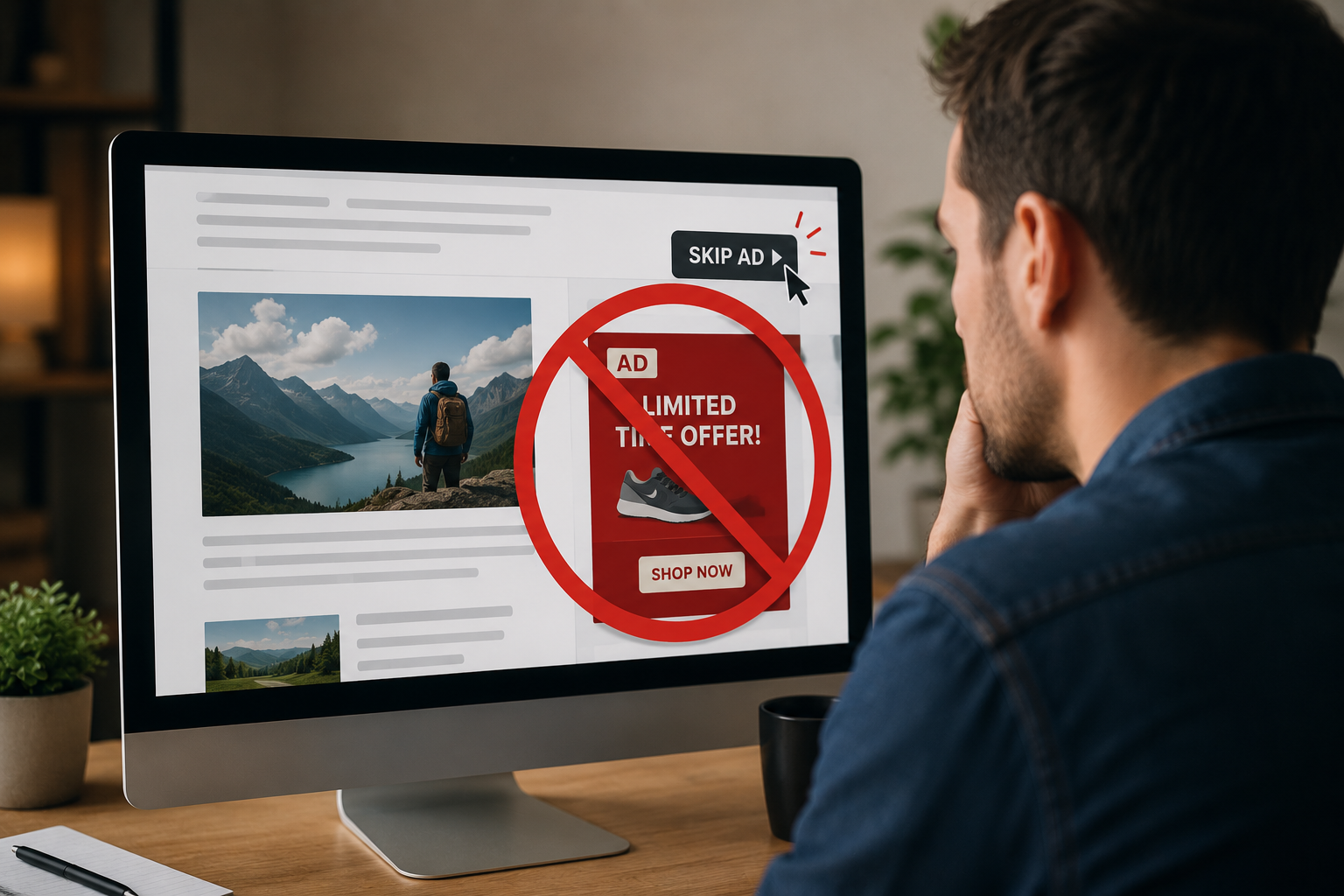
Consumers increasingly:
❌ Skip ads
❌ Block ads
❌ Ignore banners
❌ Scroll past promotions
❌ Distrust exaggerated claims
Modern consumers want information before they want sales pitches.
They want expertise before they want offers.
They want confidence before they make decisions.
👉🏻 Sales & Marketing Methodology
The Rise of Educational Decision Making
Think about your own buying habits.
Before purchasing something significant, most people now:
- Research online
- Read reviews
- Watch videos
- Compare options
- Ask AI tools
- Seek expert opinions
They don't trust a business simply because it advertises.
They trust businesses that help them make better decisions.
This is the foundation of the AI Trust Economy.
AI Is Becoming the New Gatekeeper
Historically, search engines were the gatekeepers of visibility.
Now AI systems increasingly influence:
- Business recommendations
- Search summaries
- Product comparisons
- Service provider suggestions
- Educational answers
When someone asks:
"Who is the best HVAC contractor near me?"
"What's the best solution for commercial odor removal?"
"How do I improve SEO visibility?"
AI systems are determining which sources deserve attention.
That means trust signals matter more than ever.
Also Read🖥️Why SEO Matters More Than Ever in the AI Visibility Era
Why Authority Is Becoming the New Currency
For years, marketing focused on attention.
The future belongs to authority.
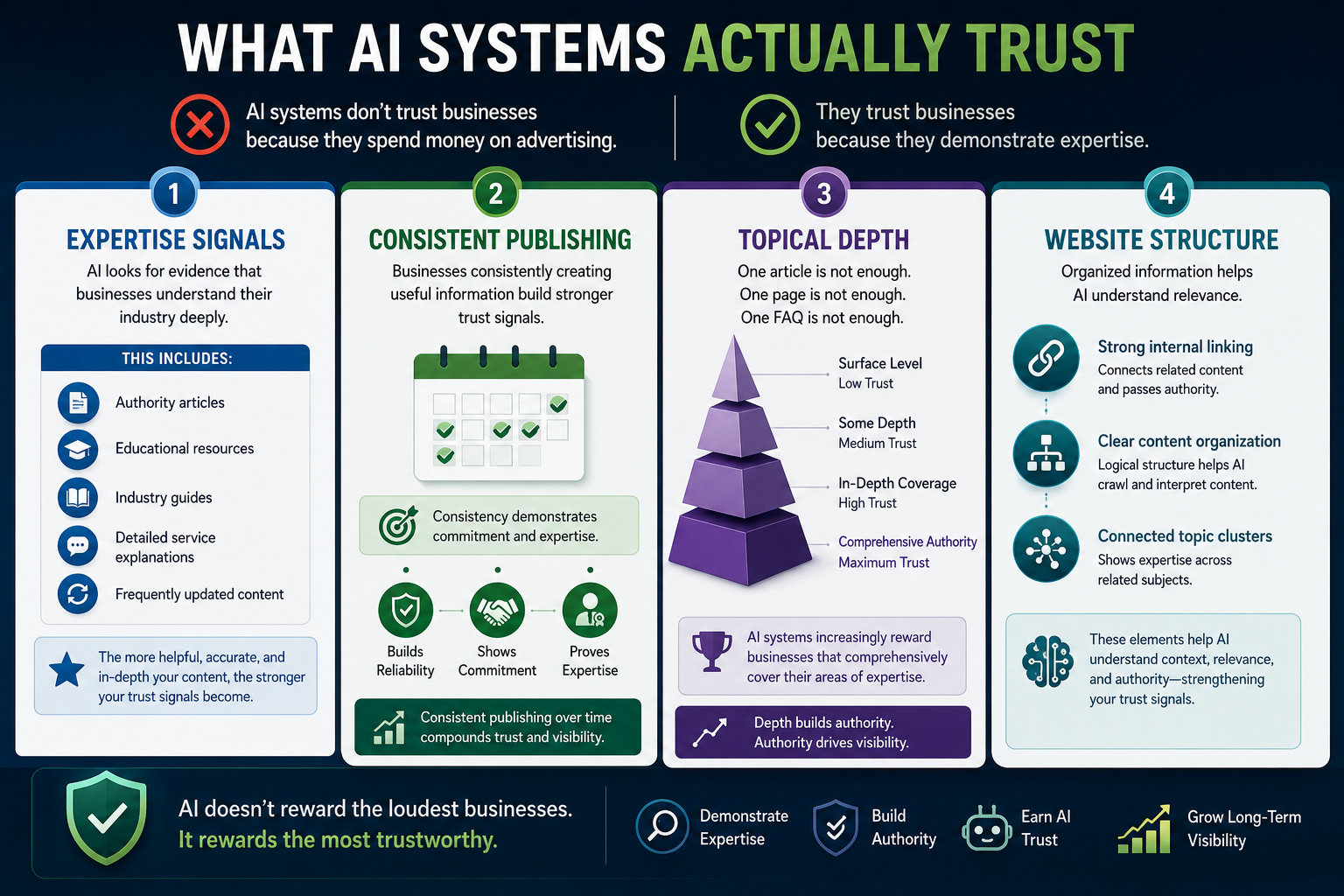
Authority is created when businesses repeatedly demonstrate:
✅ Expertise
✅ Reliability
✅ Consistency
✅ Helpfulness
✅ Trustworthiness
Advertising may introduce your business.
Authority convinces people to trust it.
👉🏻Organic SEO Support
Service Business Scenario
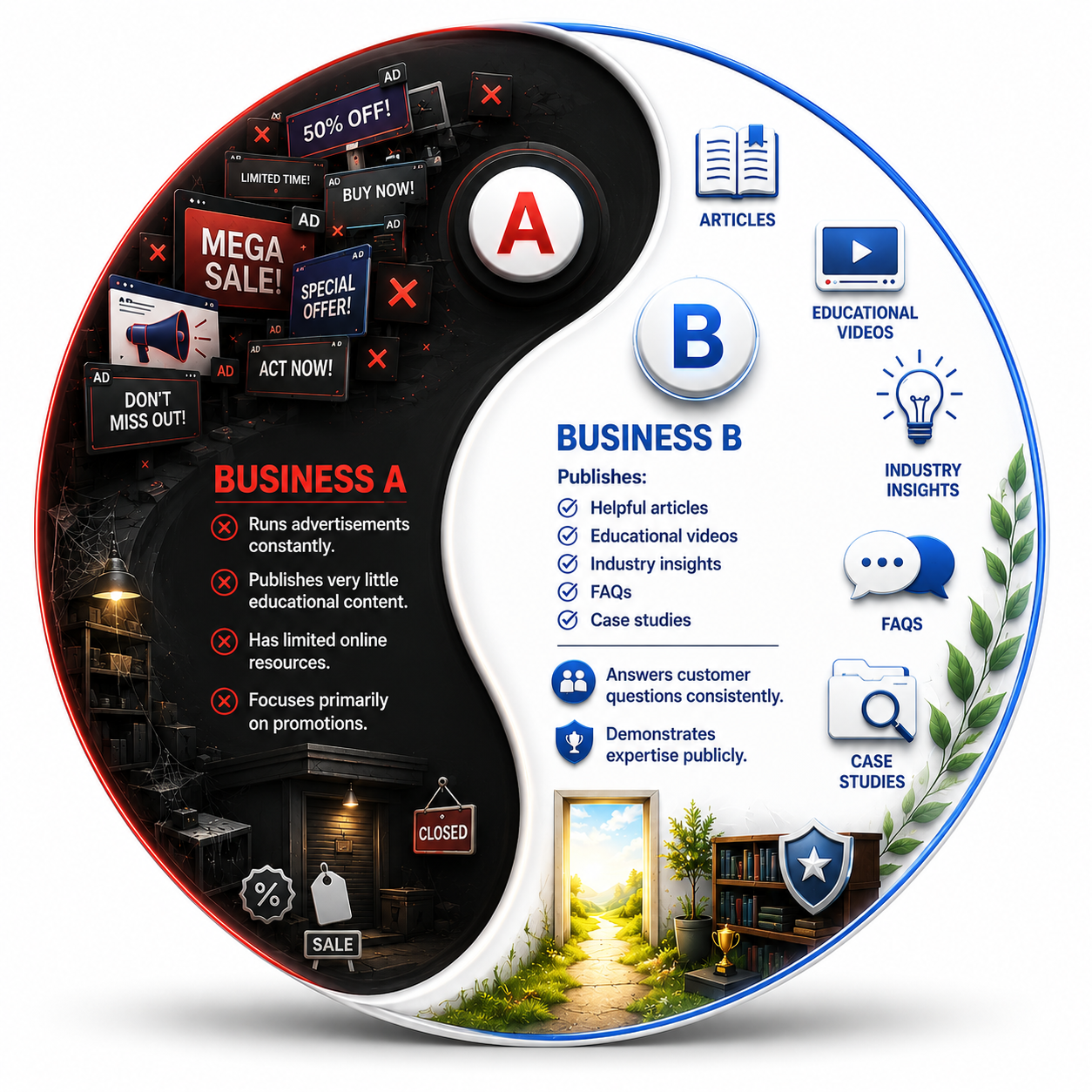
Imagine two local businesses.
Business A
Runs advertisements constantly.
Publishes very little educational content.
Has limited online resources.
Focuses primarily on promotions.
Business B
Publishes:
- Helpful articles
- Educational videos
- Industry insights
- FAQs
- Case studies
Answers customer questions consistently.
Demonstrates expertise publicly.
Which company is more likely to:
- Be trusted?
- Earn referrals?
- Appear in AI recommendations?
- Become the recognized expert?
Business B wins almost every time.
Why Most Businesses Still Get This Wrong
Many companies still ask:
"How do we get more clicks?"
Instead of asking:
"How do we become the most trusted source in our market?"
The difference is enormous.
One focuses on attention.
The other focuses on authority.
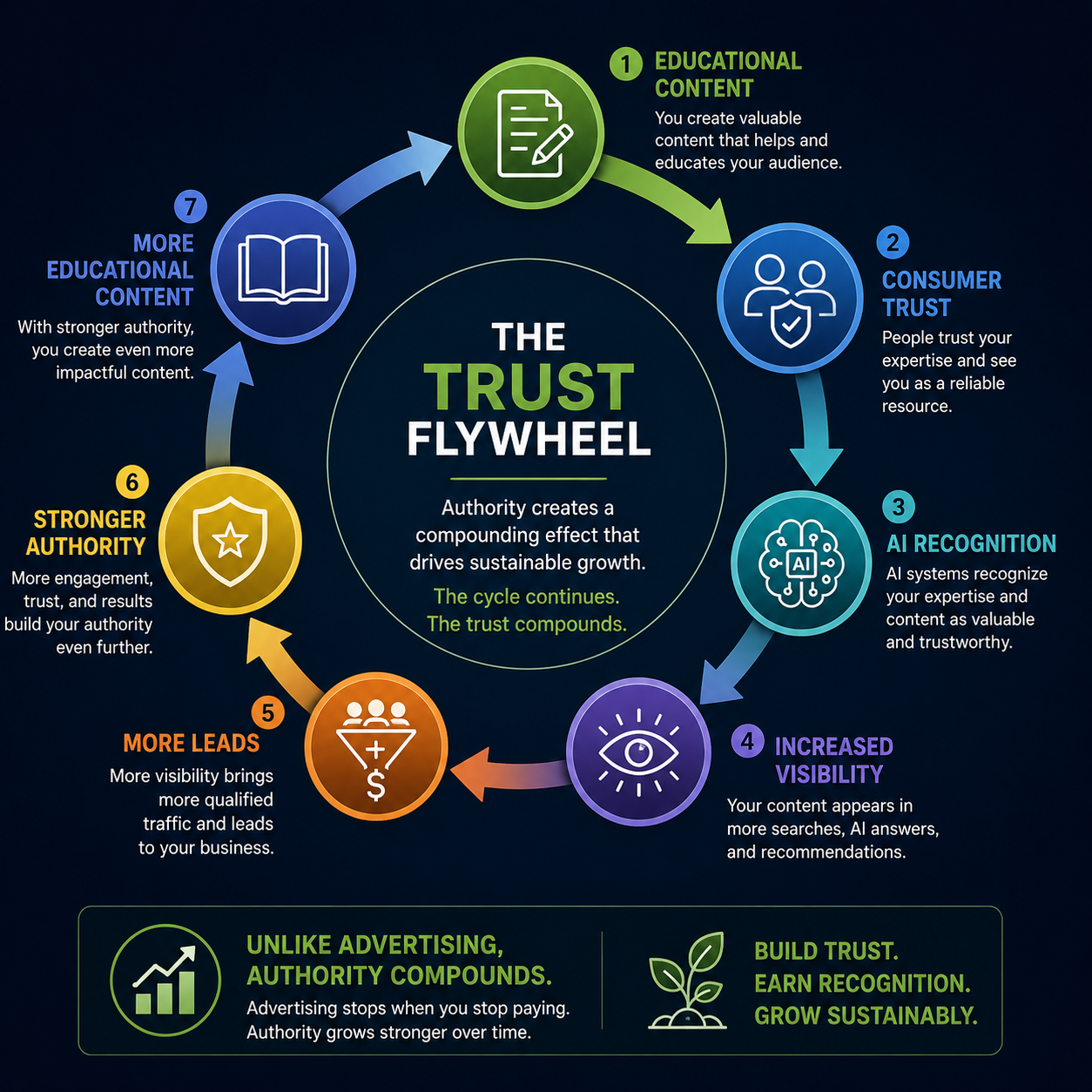
Authority creates sustainable growth.
Also Read 🖥️Why AI-Driven Operational Audits Will Replace Manual Business Reviews| Pilgrim Consulting & Design
The Hidden Problem With Chasing Attention
Advertising is rented visibility.
When spending stops:
Visibility often stops.
Authority is owned visibility.
Once authority is established, it continues creating value long after content is published.
This is why authority-based businesses often see:
- Lower acquisition costs
- Better lead quality
- Stronger referrals
- Greater trust
- More predictable growth
Also Read 🖥️The Lead Generation War in 2026: SEO vs Email Marketing vs Direct Mail for Business Growth
Why Businesses Need Strategic Guidance
This is where many companies struggle.
Most business owners understand they need:
- Better visibility
- Better SEO
- Better content
But they don't have time to become experts in:
- AI visibility
- GEO optimization
- Authority building
- Content strategy
- Digital infrastructure
Trying to navigate all of these changes internally often leads to:
❌ Inconsistent execution
❌ Confusion
❌ Missed opportunities
❌ Slow growth
Also Read 🖥️Why Traditional Business Websites Are Dying (And What Replaces Them)
Why Experienced Consulting Partners Matter
The businesses adapting fastest are often working with qualified strategic partners who understand:
- SEO
- AI visibility
- Content systems
- Digital authority
- Website infrastructure
- Trust-building strategies
A consulting partner helps businesses:
✅ Build authority faster
✅ Avoid costly mistakes
✅ Stay ahead of AI changes
✅ Implement proven systems
✅ Focus on growth while experts handle visibility
The goal isn't becoming a marketing expert.
The goal is becoming the trusted authority in your market.
Also Read 🖥️2026 Business Strategy Checkup | Pilgrim Consulting & Design
Future-Proofing Your Business (Next 3–5 Years)
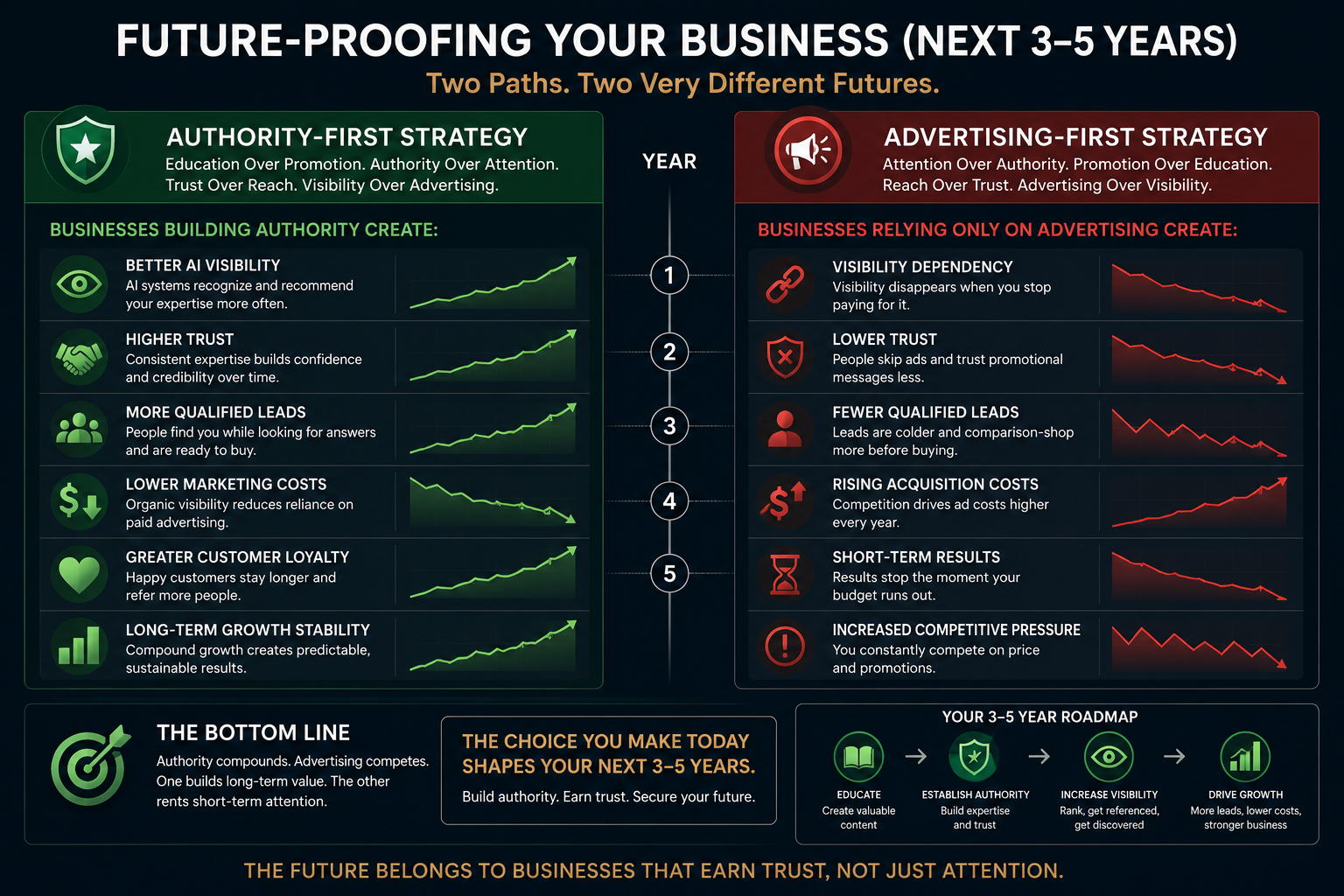
The businesses dominating the future will focus on:
Education Over Promotion
Authority Over Attention
Trust Over Reach
Visibility Over Advertising
Long-Term Value Over Short-Term Campaigns
This shift is already happening.
The question is whether businesses will adapt before competitors do.
👉🏻Appointments
Summing It Up
The future of business visibility is not about who shouts the loudest.
It's about who earns the most trust.
As AI becomes increasingly responsible for recommendations, search visibility, and customer discovery, authority will become one of the most valuable business assets available.
Advertising still has a place.
But authority is becoming the foundation.
Businesses that invest in trust, expertise, and education today are building a competitive advantage that compounds for years to come.
Also Read 🖥️Why Traditional Business Websites Are Dying (And What Replaces Them)
Give Us A Call
If your business is still relying primarily on advertising to drive growth, it may be time to rethink your visibility strategy.
Pilgrim Consulting & Design helps businesses build authority-driven digital ecosystems designed for AI visibility, trust, lead generation, and long-term growth.
The future belongs to trusted authorities.
Let's build yours.
👉🏻Contact
🏡Home
Frequently Asked Questions About the AI Trust Economy
1. What is the AI Trust Economy?
The AI Trust Economy is the shift from businesses competing primarily for attention through advertising to competing for trust through expertise, authority, and educational content. As AI systems increasingly influence customer decisions, businesses that demonstrate credibility and provide valuable information are becoming more visible and trusted than those relying solely on paid advertising.
2. Why is authority becoming more important than advertising?
Consumers are exposed to thousands of advertisements every day and have become highly skilled at filtering them out. Authority builds trust by helping people solve problems, learn, and make informed decisions. While advertising can create awareness, authority creates credibility, confidence, and long-term customer relationships.
3. How do AI systems determine which businesses to trust?
AI systems evaluate signals that indicate expertise and authority. These signals often include educational content, authority articles, FAQs, case studies, industry resources, website structure, topical depth, and publishing consistency. Businesses that consistently provide valuable information are more likely to be recognized as trusted sources.
4. What are authority signals?
Authority signals are indicators that demonstrate a business understands its industry and can provide reliable information. Examples include educational blog articles, detailed service pages, industry guides, customer success stories, expert commentary, frequently updated content, and comprehensive topic coverage.
5. What is the Trust Flywheel?
The Trust Flywheel is a compounding cycle where educational content builds consumer trust, trust increases AI recognition, AI recognition increases visibility, visibility generates more leads, and more leads strengthen authority. As authority grows, businesses can create even more valuable content, continuing the cycle and generating long-term growth.
6. Why do consumers trust educational content more than advertising?
Educational content helps consumers understand problems and solutions without immediately trying to sell them something. It positions businesses as experts and trusted advisors rather than simply advertisers. Modern consumers often research extensively before making purchasing decisions and tend to trust businesses that help them make smarter choices.
7. Can small businesses compete with larger brands using authority content?
Yes. In many cases, authority content allows smaller businesses to compete very effectively against larger competitors. Local expertise, niche specialization, and consistent educational publishing can help small businesses build trust and visibility that larger companies may overlook.
8. How often should businesses publish content to build authority?
Consistency is more important than volume. Many businesses achieve excellent results publishing one to four high-quality pieces of content each month. The goal is to regularly provide valuable information that answers customer questions and demonstrates expertise over time.
9. What is the biggest mistake businesses make with digital marketing today?
One of the biggest mistakes is focusing solely on attention instead of trust. Many businesses invest heavily in advertisements while neglecting educational resources, content marketing, SEO, and authority building. This often creates short-term visibility but fails to establish lasting credibility and discoverability.
10. Why should businesses work with a consulting partner to build authority?
Building digital authority requires expertise in SEO, content strategy, AI visibility, website structure, user experience, and long-term planning. A qualified consulting partner helps businesses avoid costly mistakes, implement proven strategies, accelerate growth, and adapt to changing search and AI technologies without requiring owners to become marketing experts themselves.